About Me
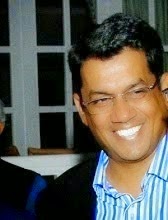
- Rajesh Jeetah
- Dr Jeetah was elected Member of the National Assembly in December 2003 for the first time for Constituency No.7 (Piton/Rivière du Rempart), and remained so until April 2005. Dr Jeetah was re-elected as: • Member of the National Assembly for Constituency No.11 (Vieux Grand Port-Rose Belle), in 2005 and became Minister of Industry, Small and Medium Enterprises, Commerce & Cooperatives (2005 to 2008).He became Minister of Health & Quality of Life (2008 to 2010). • Member of the National Assembly for Constituency No.10 (Montagne Blanche- GRSE)in 2010 and became Minister of Tertiary Education, Science, Research and Technology till 2014. Education and Qualifications: a. University of Cambridge (2002 -2003) - ACU Research Fellowship b. University of Manchester Institute of Science and Technology (UMIST) (1984-1993) • BSc (Hons) – Textile Technology • PhD – Textile Technology


CLOSING CEREMONY MODEL AFRICAN UNION SUMMIT


20
August 2014
H.E
Dr SalifSall, Ambassador of AU South African Regional Office,
Members
of the Diplomatic Corps,
Heads
of tertiary education institutions,
Delegates,
We have reached the end of this Model Summit
after two days of intense deliberations. I have obtained very positive feedback
on the level of the debates and the substantial contribution made by delegates
in terms of ideas and recommendations.
Once again let us give a big applause to all the
participants and their mentors for their active participation and making this
event successful.
Let me share with you that this event is also a
new experience for my ministry too. As you know the Ministry of Tertiary
Education, Science, Research and Technology is a new ministry – only 4 years
old – and many of the events that we have organized are first time events. I am
proud that the concerted efforts of the universities and higher education
institutions, my ministry and the AU SARO have made this first Model African Union
Summit a resounding success.
Dear
delegates, this Model Summit has given all of you the opportunity to speak in a
plenary session, to undertake research on issues relating to Africa, to learn
to present your ideas and recommendations in a structured manner and work in a
team.
I have no
doubt that at the end of today’s session, you have acquired a deeper
understanding of the work and role of the African Union as the voice of Africa,
as the catalyst of the economic transformation on the continent and a forum to
promote dialogue, conflict resolution and peace and stability.
As stated
in our speeches at the Opening ceremony, Africa is said to be the next growth
pole. It is on the rise. From 2001-10, six of the world’s ten fastest-growing
economies were in sub-Saharan Africa.
It has now
to make stronger efforts to achieve the Millennium Development Goals (MDGs) and
to improve conditions for African people. It has to address the challenges of
climate change, food security and combating diseases.
African Economic Outlook mentions that “with over 200 million
people between the ages of 15 and 24–a figure that will double by 2045–Africa’s
fast-growing population is the youngest in the world.” While the youth
population is increasing, it is also important for them to have access to
higher education. The pool of resources and capacity in Africa should be harnessed and directed towards the productive
sectors of the economy.
The Guardian published an article recently pointing out that
“ Africa has an unprecedented opportunity to set a course for sustained
economic growth, shared prosperity and a breakthrough in poverty reduction. But
this cannot be achieved without the full participation of young people. Young
Africans have extraordinary levels of energy and creativity, as well as hopes,
ambitions and dreams.
It is worth recalling
that the destiny of Mauritius as an African state has always been linked with
the great continent. We achieved our own
decolonization in the great wind of change which blew over Africa in the
1960s.Our founding Fathers have ensured that our solidarity with all African
states remains strong and our first Prime Minister,Sir
SeewoosagarRamgolam was the President of Organisation of African Unity in 1976.……We have to
continue to work on the same path and give the opportunity to our young people build
and realize their vision of a sustainable, prosperous and fair continent for
the benefit of all.”
Mauritius is
promoting access to higher education and research and is eager to establish
collaboration with African states to provide opportunities for higher education
and capacity building. We therefore hope that this Model Summit will help to
disseminate a positive image of Mauritius as a destination for quality higher
learning and bring more students from the African continent to our
institutions.
To conclude, I
wish to thank Dr Sall and would like to suggest to him that the best delegates
be given an opportunity to participate in similar model summits in other
countries. The best delegates should be facilitated to develop a network with
their counterparts in other countries.
I wish once again
to thank all the organisers, the Director General and staff of Mahatma Gandhi
Institute, the Vice Chancellor and Directors of all the participating
institutions and the group of volunteers who have ensured security and press.
You have all been
remarkable and made us proud.
I now declare the
Summit closed. Thank you.
OPENING CEREMONY MODEL AFRICAN UNION SUMMIT


SPEECH OPENING CEREMONY MODEL AFRICAN UNION SUMMIT
19 AUGUST 2014
His Excellency Dr Saiff Sall, Ambassador, from the
African Union South African Regional Office,
Members of the Diplomatic Corps,
The Director General, Mahatma Gandhi Institute,
Heads of tertiary education institutions,
Dear students - heads and members of delegations,
Today you are all here to participate in the
African Union Model Summit – you are pioneers as this is the first time that
tertiary education institutions in Mauritius are participating in such an
event.
I understand that similar Model Summits have been
organized in Malawi in 2013, and in Namibia one month ago. When His Excellency
Dr Sall made the proposal to us to organize a Summit in Mauritius, we did not
think twice and said yes, why not.
I am pleased that we got a very enthusiastic
response from our universities and have been able to constitute the 54
delegations within a short time. All the 350 students present today and their
mentors deserve our congratulations and a big applause.
This is an activity which will allow students to get
a clearer picture of the functioning of the African Union, its role in
promoting the development of Africa and cooperation among its member states. It
will enable students to work in teams, build confidence and get the chance to
know their own potential as possible future leaders.
But most importantly, it encourages students to
conduct research on the issues related to Africa and make recommendations
through this summit.
As you probably know, the African Union has developed the African Youth Charter
that aims to strengthen, reinforce and consolidate efforts to empower young
people through meaningful youth participation and equal partnership in driving
Africa's development agenda. Young people
should be given the opportunity to voice their opinions about the challenges
facing Africa. The future belongs to you and you have to think about how to
make it better.
The African Union highlights that about 65% of the total population of
Africa are below the age of 35 years, and over 35% are between the ages of 15
and 35 years - making Africa the most youthful continent. By 2020, it is
projected that out of 4 people, 3 will be on average 20 years old. Thus, it is about
your own future that you will be discussing during this Summit.
All the reports on Africa show that
there are optimistic trends, with wide scope for growth. The World Bank has
pointed out that the economic outlook for Sub-Saharan Africa is positive, with
growth rising to 5.3% in 2012, and 5.6% in 2013 and growth is forecasted to
rise to 6% this year.
Africa is said to be the continent of
the future. By 2040, it will have the biggest labour force equal to the
combined labour force of both China and India. It has 30 percent of the World’s
mineral reserves. Some
of the long term development challenges of Africa are job creation, increasing
competitiveness, infrastructural development, climate change, women’s
empowerment, reducing poverty, improving health and strengthening governance.
It needs to build the professional capacity and skills and invest in research,
science and technology to address all these challenges.
Being part of
Africa, Mauritius has been advocating for a policy of regional integration
through increased trade, exchanges and joint projects. Through my Ministry, we are working towards increasing
access to higher education to African students. We are offering 50 scholarships
for undergraduate studies every year to African students. 17 students are
already here under this scheme and this year there will be another group of 17
scholarships beneficiaries coming to Mauritius. The setting up of an African School of
Leadership is in process.
We are working
together with South Africa in partnership with seven other African countries on
the Square Kilometer Array (SKA) project, the largest telescope to be built in
the world. We are planning to set up new
centres of technology – such as nanotechnology and space science - which would
benefit and contribute to research and innovation in Africa.
The IIT Research
Academy which we have recently launched will provide opportunities to African
students to pursue high standard engineering and science courses at Masters and
PhD level in Mauritius. Recently at the Africa USA Summit, our Prime Minister
called for increasing trade with Africa.
As delegates of
this Conference, you will be called to reflect upon the challenges facing
Africa and come up with innovative solutions.
I wish you all good luck. Be
bold and frank in the deliberations. You should make of this summit the best in
the southern African region.
I wish to thank Dr Saiff
Sall for his support. I wish also to thank all the volunteers, the staff of my
ministry, the tertiary education institutions and in particular Mrs M.
Bhujoharry, who has guided us throughout the organization of this event. Thank
you.
Dr R. Jeetah Ministry of Tertiary
Education, Science, Research and Technology
19 August, 2014
Subscribe to:
Posts (Atom)